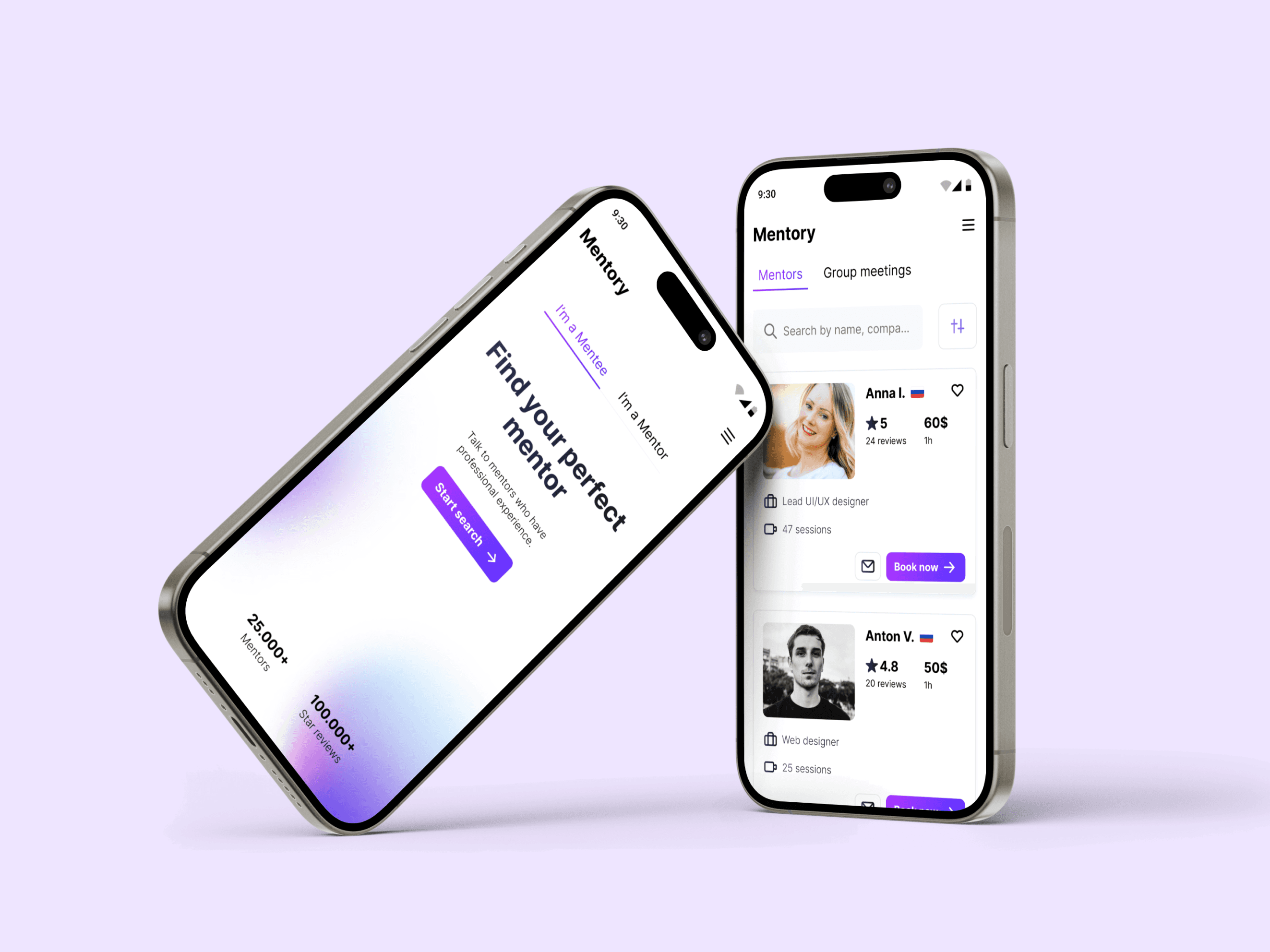
Mentorship platform design
Simplifying mentor selection and scheduling for improved user experience.
MY ROLE
Solo UI/UX Designer
PROJECT TYPE
Case Study
01 UNDERSTANDING
Task
Design a user-friendly interface for a mentoring service, focusing on simplifying the process of selecting a mentor and scheduling an appointment.
Business Goals
Increase user engagement and trust in the mentoring platform, leading to higher mentor bookings and retention rates.
Mission for User
Easily find and book a mentor who matches their professional goals, preferences, and learning style, ensuring a productive and rewarding mentoring experience.
Target Audience
Professionals seeking mentorship, ranging from beginners starting their careers to experienced individuals looking to advance their skills or change industries.
Success Criteria
Success would be demonstrated through improved usability, positive user feedback, and alignment with the business goal of increasing mentor bookings and platform engagement.
My role involved:
02 CONTEXT
My task was to design a mentoring service platform catering to both beginners seeking foundational guidance and experienced professionals aiming to fill knowledge gaps or refine their expertise. The challenge was to create an intuitive and reliable experience for selecting mentors and scheduling sessions, addressing common concerns such as finding a suitable match and ensuring the time spent with mentors provides valuable outcomes.
My role was to design a seamless user journey that empowers users to confidently select mentors and book sessions tailored to their specific needs and goals.

03 DESIGN PROCESS STEPS
Phase 1 – Problem Identification and solution definition
Action: Mapped out user pain points, such as difficulty in finding suitable mentors and concerns about wasting time or money. Defined clear, actionable solutions for these issues.
Purpose: To establish a foundation for the service design by addressing real user challenges and aligning the design goals with user needs.
Phase 2 – Comparative analysis of competitors
Action: Conducted an in-depth analysis of existing mentoring services to identify their strengths, weaknesses, and opportunities for improvement.
Purpose: To gather insights into the market, understand user expectations, and pinpoint design opportunities that would give the service a competitive edge.
Phase 3 – Service mapping
Action: Created a detailed service map outlining the entire mentoring journey, from discovering mentors to scheduling sessions and providing feedback.
Purpose: To provide a visual structure of the service, ensuring all touchpoints were accounted for and the user experience remained seamless.
Phase 4 – User flows
Action: Designed user flows for key actions, such as searching for mentors, reviewing profiles, and booking sessions.
Purpose: To ensure intuitive navigation and eliminate friction points, guiding users effortlessly through the service.
Phase 5 – Low-fidelity wireframing
Action: Created wireframes for the main screens, focusing on layout, structure, and prioritization of key elements.
Purpose: To quickly iterate and test the initial design concepts before moving to detailed visual design.
Phase 6 – High-fidelity design in Figma
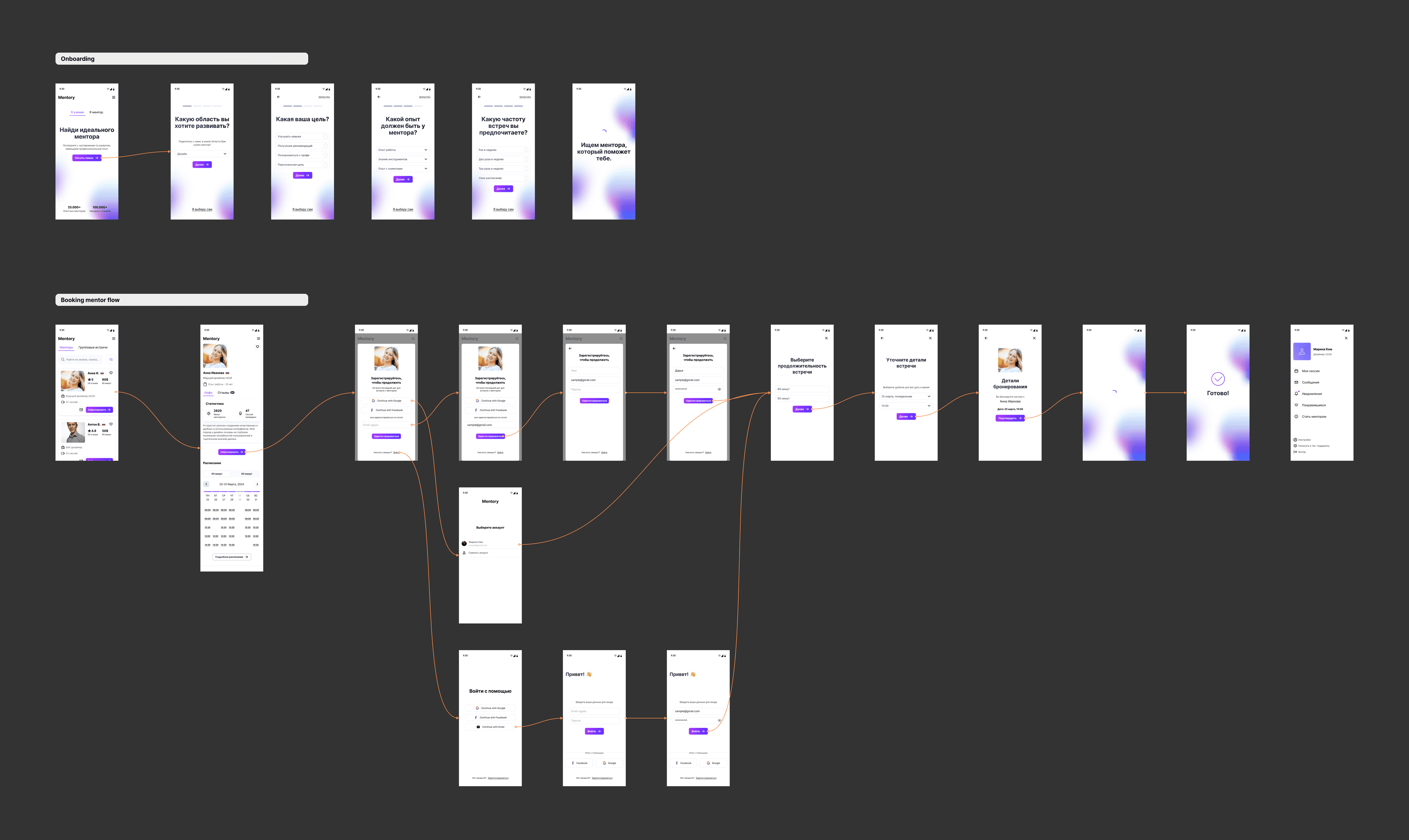
Action: Translated wireframes into polished, high-fidelity designs using the established design system.
Purpose: To deliver a professional, visually consistent user interface ready for implementation.
Phase 1 – Problem identification and solution definition
The primary challenge for the service is ensuring effective matching between mentors and mentees, as compatibility plays a key role in a successful mentoring relationship.
Personalized mentor selection: Provide mentees with the ability to select a mentor based on an input questionnaire. This ensures the matching process is tailored to their preferences, skills, and needs.
Simplified booking and mentor switching: Make the process of booking a mentor intuitive and flexible, allowing mentees to change their mentor with ease if needed.
Phase 2 – Comparative analysis of competitors
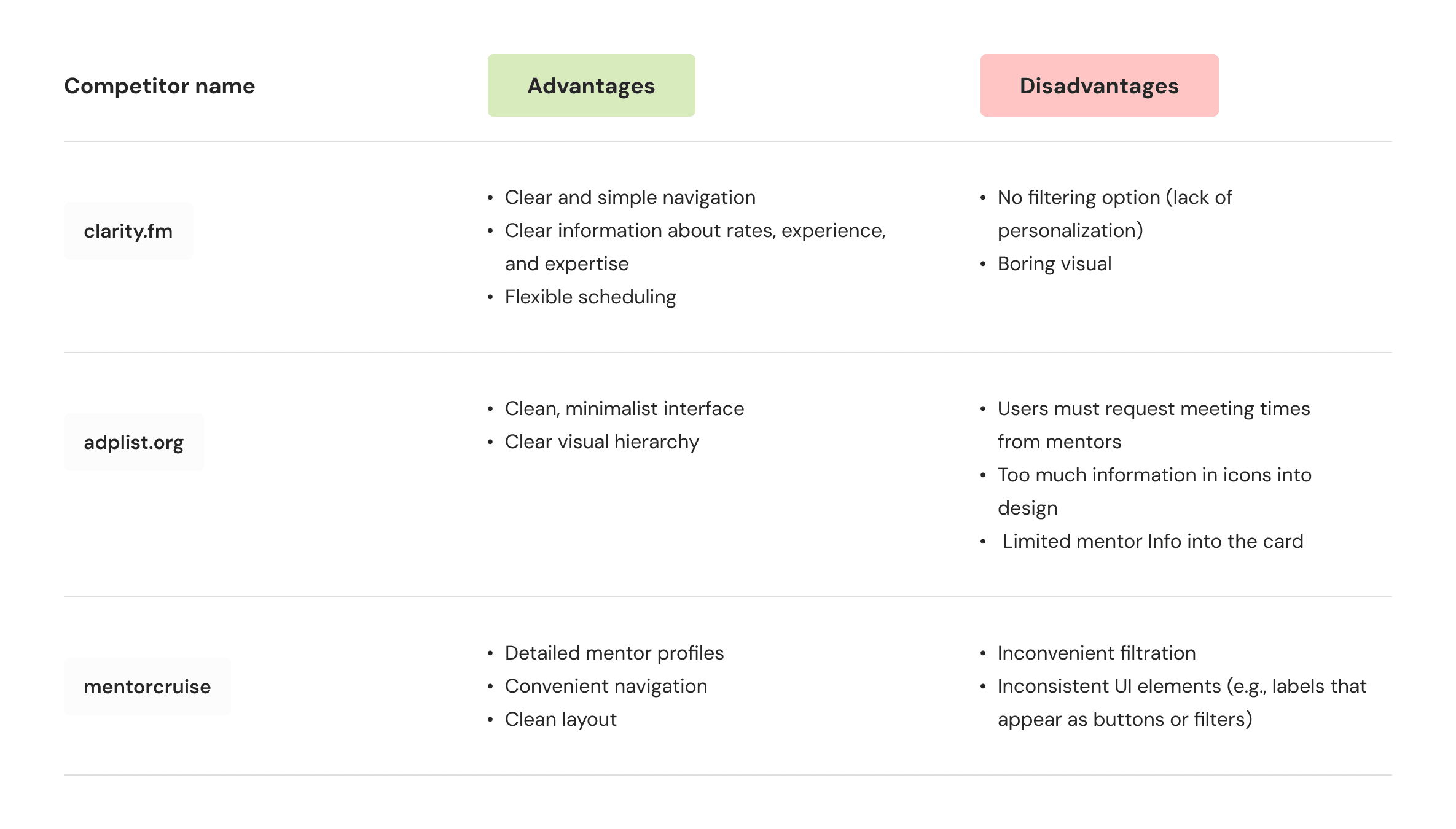
I analyzed the 3 main competitors and identified a number of their advantages and disadvantages that helped me in making decisions for my project.
Phase 3 – Service mapping
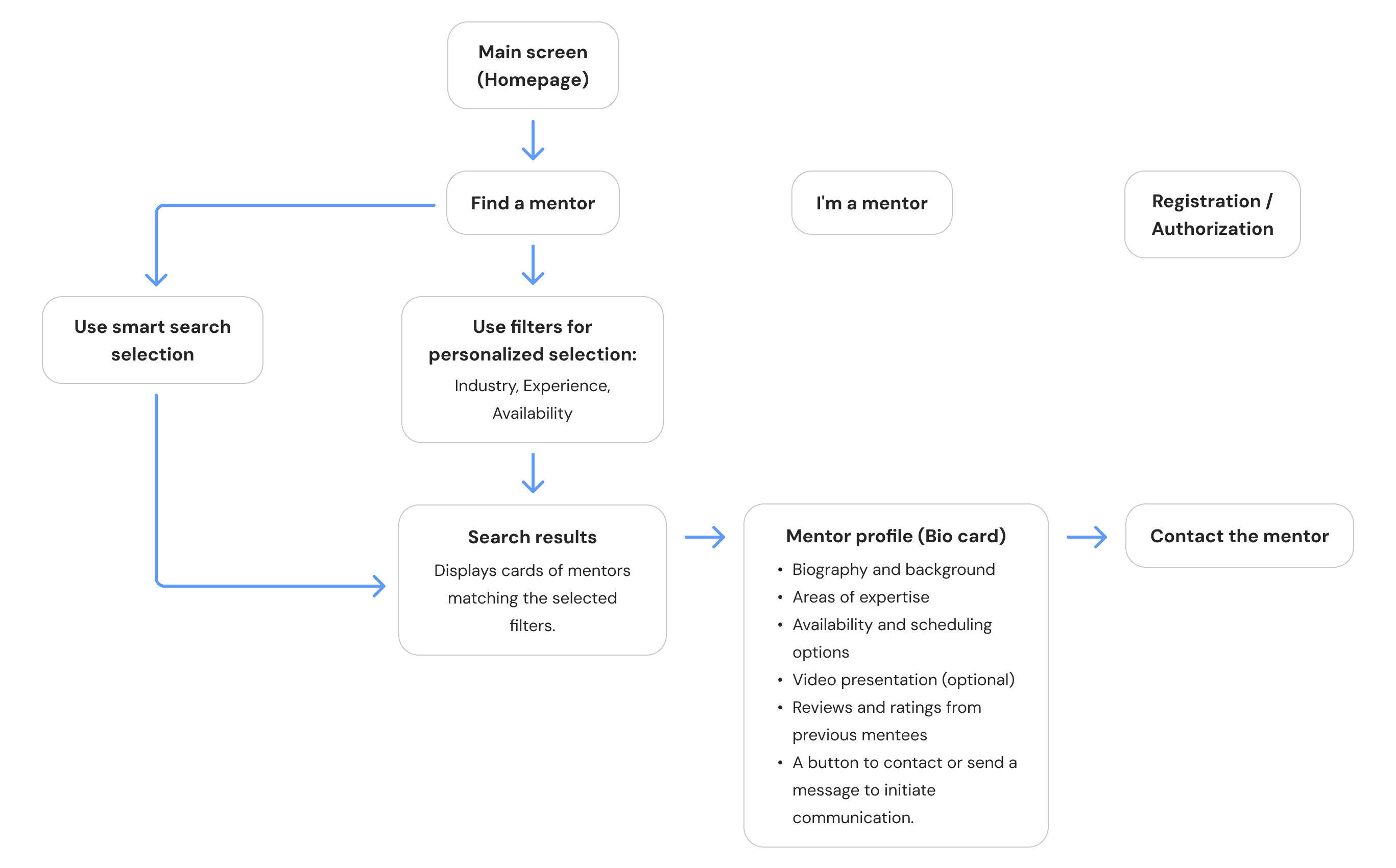
I identified the main points that a mentee must go through to successfully select a mentor:
Phase 4 – User flows
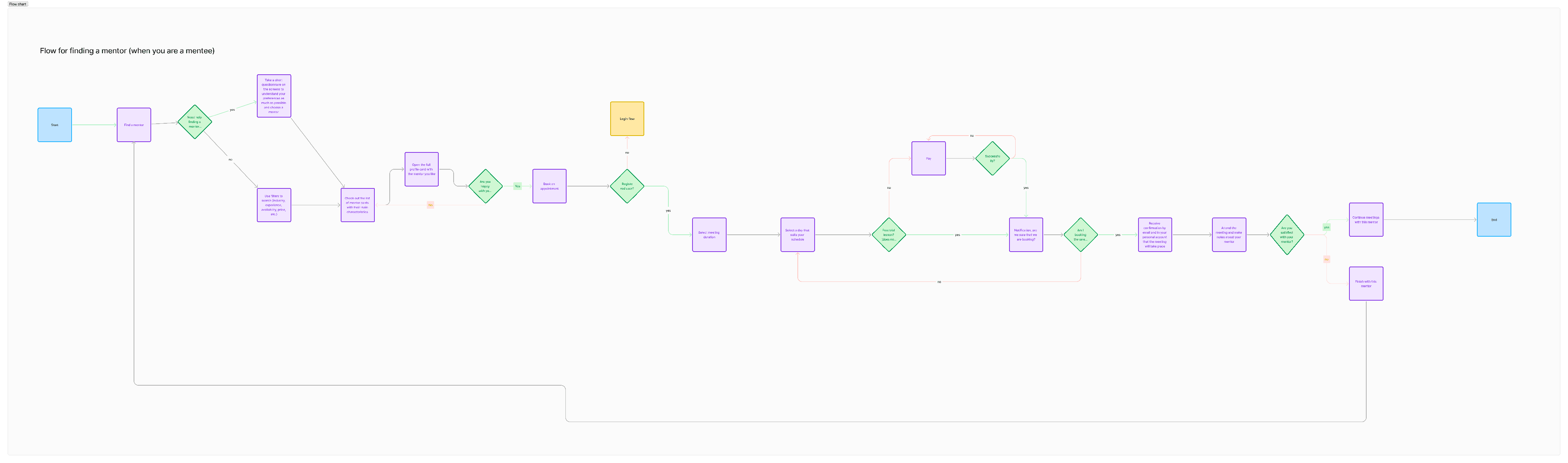
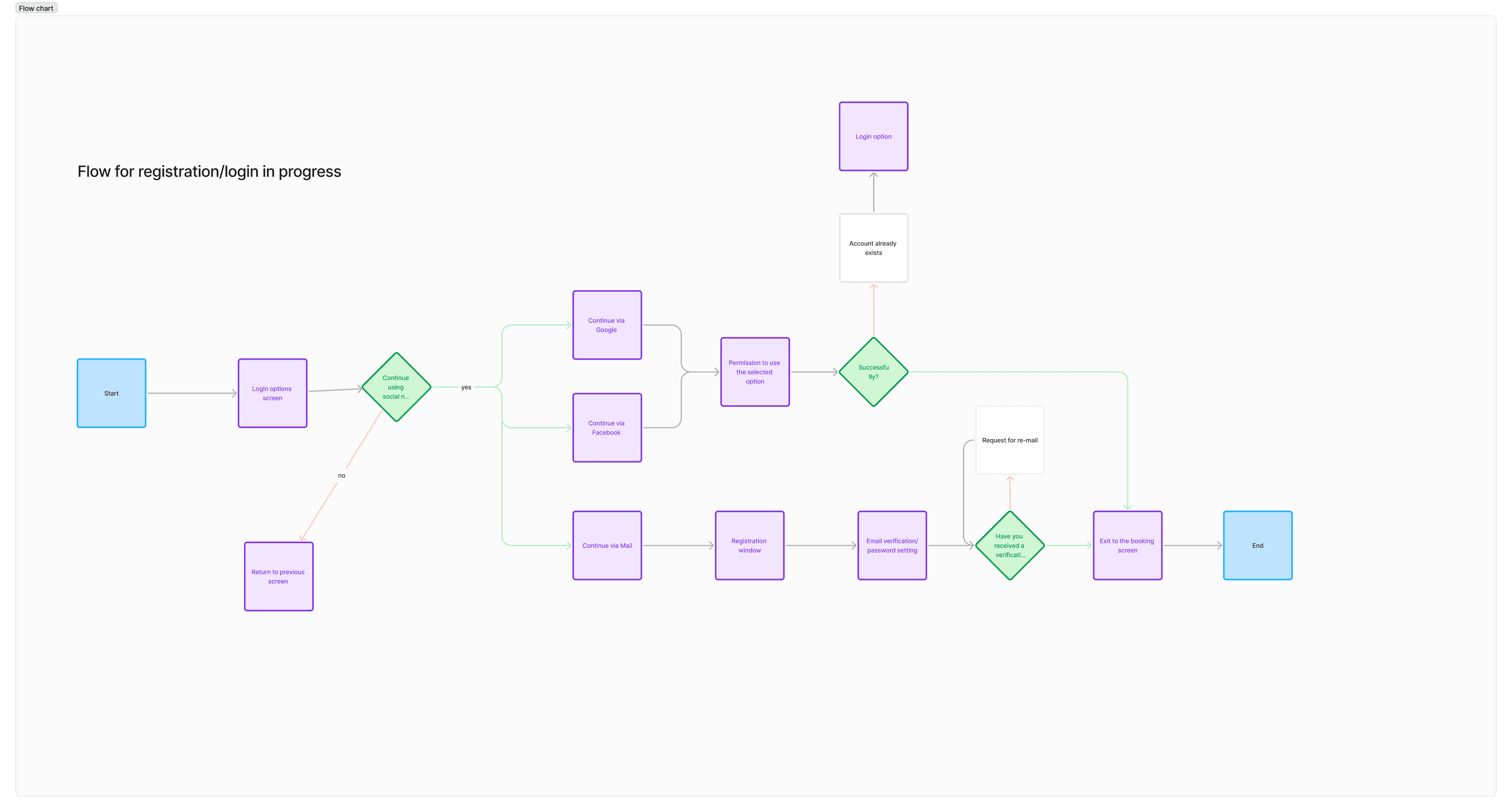
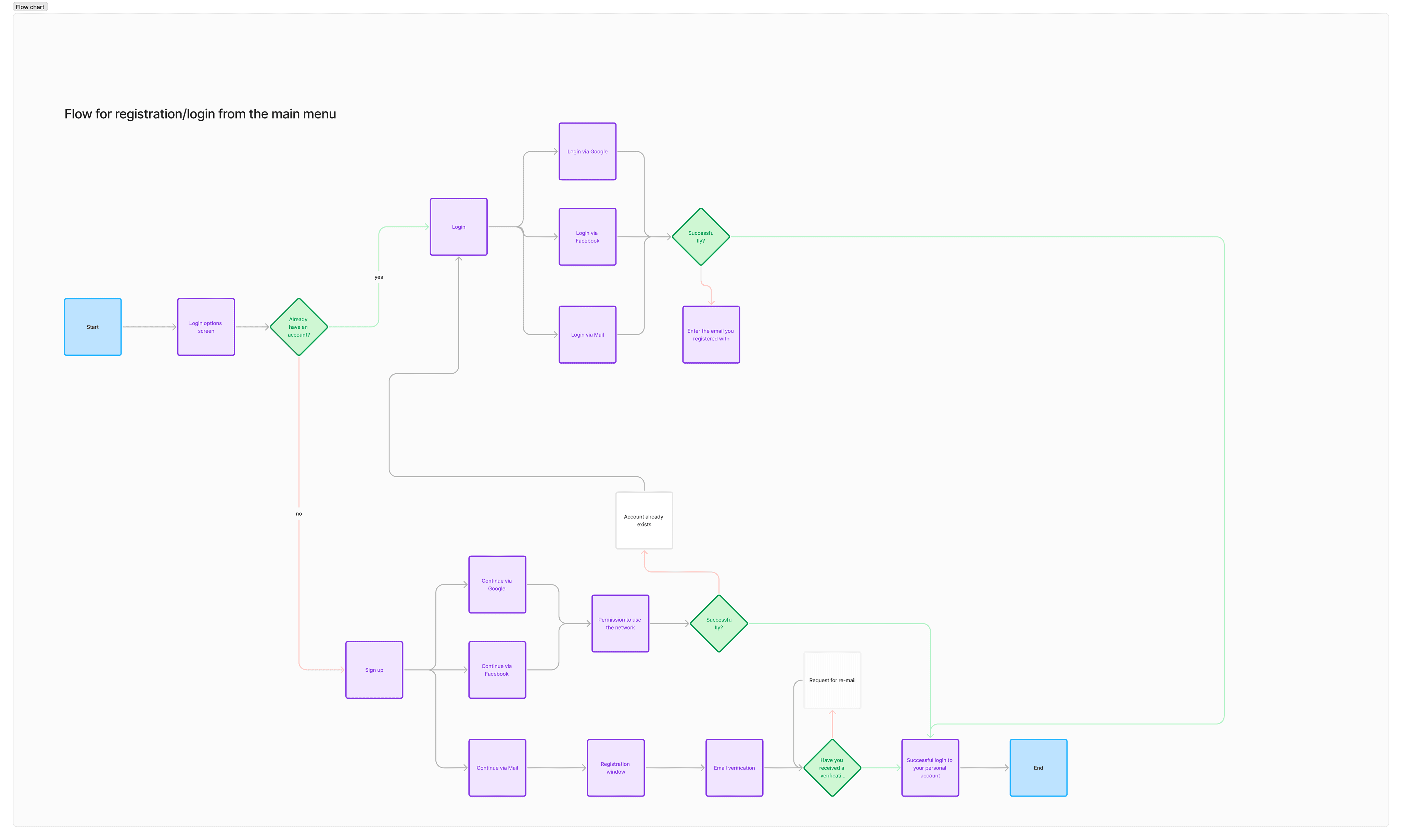
I started by mapping the user journey for a successful scenario. Then, I worked on alternate paths for cases where things don’t go as planned.
Link to Figjam file
The first flow reflects the process of finding a mentor (as a mentee):
Second flow reflects the registration/login in progress:
The third flow reflects the registration/login process from the main menu:
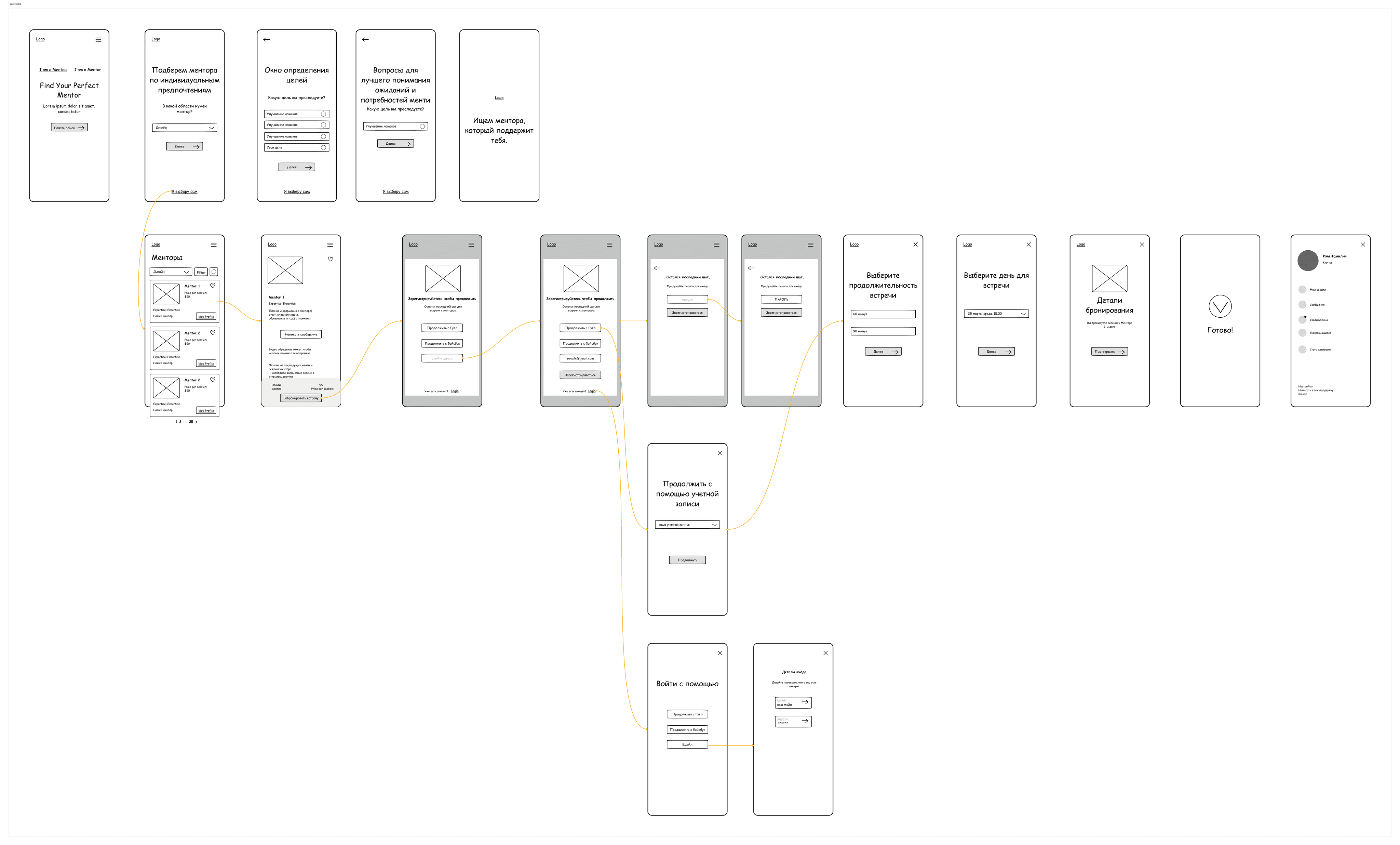
Phase 5 – Low-fidelity wireframing
I created low-fidelity wireframes to determine the placement and structure of key elements on each screen.
Next, I selected a suitable design system, prioritizing simplicity in elements and fonts to ensure a clean and clear presentation of information—crucial for a mentoring service. I then applied the chosen components and color scheme to the project.
Phase 6 – High-fidelity design in Figma
04 CONCLUSION
Project summary
This project focused on designing a mentoring service that streamlines the process of finding and booking mentors. Key features include intuitive navigation, detailed mentor profiles, and a seamless booking flow, all aimed at providing users with a straightforward and efficient experience.
The next step involves conducting user testing and iterating on the design to address any unclear areas and further enhance usability.
What I would like to do next:
Let’s
connect!
© 2023 Daria Shagina | Built with Framer